How do we deliver comprehensive cancer care to the people of Kerala?
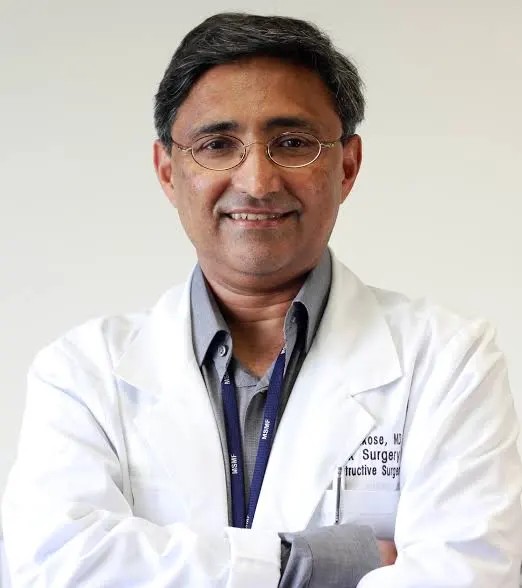
Taking cancer care out of the four walls of the hospital: a conversation with Dr. Moni Abraham Kuriakose of Karkinos Healthcare.
The journey so far
Most cancer care in India still begins and ends inside a hospital. Karkinos Healthcare was built on a different idea: that cancer care can be distributed, and that the community itself can be a cancer centre.
Karkinos began as a technology-led oncology platform. Dr. Kuriakose describes the platform as one that supports a patient through the whole journey, from screening and diagnosis to treatment and follow-up, delivered in a distributed fashion and taking care out of the four walls of the hospital and into the community. He says it has served around 3 million patients.
The company's work includes research as well as care. In 2022 it opened the Advanced Center for Cancer Diagnostics and Research in Kochi, a central laboratory for its network, with a focus on early diagnostic tools and molecular assays for precision medicine.
Medinn's view
Why this matters, and where the bottleneck is
In our conversation, the hardest part was twofold. Large tertiary cancer centres were slow to adopt standardised care, so that every patient follows the same agreed pathway. And once a patient has been treated, those centres have little incentive to send them back to a community cancer clinic for follow-up and continuing care closer to home.
That second point is the heart of it. A distributed model only works if care actually flows back out into the community. Follow-up is always the toughest part of cancer care, and it is where a distributed approach can make the biggest difference.
The bridges that need to be built
Better adoption of digital health in primary health clinics.
Adoption of the ABDM system in hospitals, so that a patient's records and care can move with them.
The vision
At the heart of Karkinos's model is a comprehensive cancer centre, anchoring a network of community cancer clinics. The aim is quality cancer care that reaches people where they live, with a specialist centre behind every clinic.
Dr. Kuriakose sees digital adoption in healthcare continuing to rise, and AI helping to democratise quality cancer care, to the point where a patient can be as knowledgeable as a healthcare provider. What needs to be done, in his view, is ABDM adoption and better health records.
Cancer care still has several gaps, and follow-up is always the toughest part. Patients often do not know which centre is right for the care they need, and the journey between hospital and home is where many are lost. We think Karkinos is tackling the right problem in the right place: starting from the community clinic and making follow-up and access easier. It is a model worth studying as a benchmark for how cancer care in India could work.
Through People of Healthcare, Medinn is building bridges and widening adoption and collaboration between startups and hospitals in Kerala.
Figures and views are Dr. Kuriakose's own unless stated. Photo supplied for this feature. People of Healthcare is an initiative of Medinn, by Dr. Sidharth Narayanan, House Surgeon, GMC Kozhikode.